On 19 July 2026, Ferran Torres scored in the 106th minute at MetLife Stadium in New Jersey. Spain 1, Argentina 0. Final whistle. World champions.
I was watching from Melbourne. And I can tell you — it hit differently when you're Spanish.
My name is Ignacio. I grew up in Madrid. I've been cooking paella at Melbourne events for years now. And the morning after Spain lifted that trophy for the second time in our history, the messages started coming in. Friends, past clients, people who'd eaten at our events. All some version of the same thing: we need to celebrate this properly.
They're right. Spain just put on the greatest footballing display of the year, in the biggest tournament on earth. The least we can do is honour it with the greatest dish Spain ever gave the world.
What Spain Actually Won — and Why It Matters Here
The 2026 FIFA World Cup was the largest in history — 48 nations, 104 matches, three host countries. Spain navigated all of it and came out standing at the end. Rodri controlled the midfield for 120 minutes the way he controls it for Manchester City. Pau Cubarsi, barely 20 years old, was immovable at the back. And when it mattered — when the match had ground through 90 goalless minutes — Torres finished it.
In Australia, the interest in the tournament was real. Melbourne has one of the most diverse football audiences in the country. People were watching. People were talking about it. And now that Spain has won, the question on a lot of minds — including, apparently, Melbourne's party planners — is how to mark the occasion.
"Paella is the dish that represents Spain more than any other. It travels the world the way Spain's football does — with a recognisable style that's impossible to imitate." — Ignacio, Tapas Madriz
There's a natural connection here that isn't forced. Spain won the World Cup. Spain gave the world paella. If you want to celebrate one properly, you do it with the other.
Why Paella Is Built for a Celebration Like This
Most catering sits in the background of an event. It fills people up and gets out of the way. A live paella pan is the opposite of that — it becomes the event itself.

When Ignacio arrives at your venue, sets up a 90cm carbon steel pan and lights the burners, people stop and look. The sofrito goes in first — onion, tomato, garlic, paprika — and the smell alone is enough to pull a crowd. Then the rice, then the saffron-infused stock, and for the next 35–40 minutes the whole pan develops in front of your guests. By the time it's ready, they've been watching it build. The anticipation is part of the experience.
For a World Cup celebration specifically, this works on two levels. First, it's a genuine communal meal — a large pan shared between people, which is how Spaniards have always eaten paella. Second, the live cooking gives the gathering a focal point that keeps energy up, the way a big screen does during a match.
The paella varieties that suit a celebration event:
- Paella del Senyoret — king prawns, mussels, squid, saffron. The seafood version is visually the most spectacular, and the one that photographs best. If your guests are going to post about the evening, this is the one that generates the content.
- Paella Montañesa — pork ribs, paprika, seasonal vegetables. The mountain-style meat paella from the Spanish interior. Deeper, richer, more warming — perfect for July evenings.
- Arroz Negro — black rice, squid ink, alioli. Dramatic to look at, intensely flavoured. If you want to serve something that feels genuinely Spanish rather than broadly Mediterranean, this is it.
For groups of 30 or more, running two varieties side by side is standard — one seafood, one meat, so every guest has a preference covered.
The Tapas That Start the Party
In Spain, you don't sit down and wait for the paella. You eat tapas first, standing up, with a drink in hand. That's not a warm-up act — it's the opening hour of the evening, and it matters.
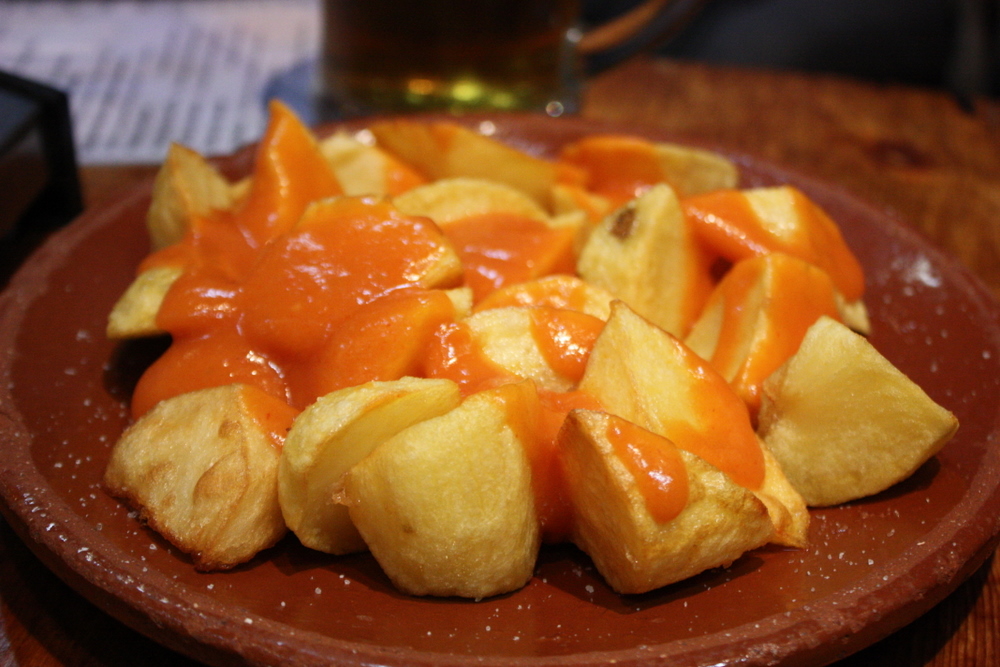
The tapas Tapas Madriz serves at events are the same ones you'd find in a decent Madrid bar: Patatas Bravas with house alioli and bravas sauce, Croquetas (jamón or chicken, depending on preference), Pan Tumaca — sourdough rubbed with tomato and olive oil — and Tortilla Española when the package includes it.
Served while the paella cooks, tapas solve a practical problem: they keep guests fed and social during the 35–40 minute cooking window. But they also set the tone. By the time the paella comes out, the event already feels Spanish. The paella completes something that started with the first tapa.
For a World Cup celebration: Ask about Gambas al Pil-Pil (prawns in chilli and garlic oil) as a premium tapa add-on. It's one of the most distinctly Spanish tapas on the menu and tends to disappear fast.
Who Books a Celebration Like This
The World Cup win is a legitimate occasion — not just for football fans. Spain's victory has dominated sports coverage, social media and conversation across Melbourne this week. That creates a window for anyone who wants to host a gathering that feels timely and memorable.
The bookings that make sense right now:
- Corporate events — a July gathering with a Spanish theme while Spain is on everyone's mind. Easier to pitch to a team than a generic function.
- Private group dinners — a dinner for 15–40 friends who watched the tournament together and want a proper send-off to the month.
- Sports clubs — football clubs and social sports groups across Melbourne's south-east are natural fits. The paella-as-post-season-celebration is already a pattern we see regularly.
- Birthday parties in July — if your birthday falls this month, you have a readymade theme that requires zero effort to explain.
Tapas Madriz caters for groups from 15 to 150 guests across Melbourne and beyond. Travel to most inner and middle suburbs is included in the package price.
Packages and Pricing
Live paella catering starts at $39 per person and scales up depending on how much of the Spanish experience you want to build around it.
| Package | Price | What's included |
|---|---|---|
| Paella Only | From $39pp | Live paella cooked on-site, full setup & cleanup |
| El Clásico | From $65pp | 2 tapas starters + live paella, full service |
| La Gastronómica | From $75pp | 3 tapas starters + live paella, full service |
| El Chef's Premium | From $95pp | 4 tapas + signature paella, premium ingredients & full chef service |
All packages include live on-site cooking, serving equipment, and full cleanup. Minimum 15 guests.
July dates are available now. To check availability and get a quote for your celebration, use the enquiry form or reach Ignacio directly on WhatsApp at 0422 184 779. Most enquiries get a response the same day.
A Note from Ignacio
I've cooked paella in Melbourne for years. I've watched Spain win the Euros, the Women's World Cup, and now this — the men's World Cup, against Argentina, in extra time. I know what it means back home. And I know what it means to be Spanish in a city like Melbourne, where the football culture is real and people genuinely care about who lifts the trophy.
If you want to gather people and mark the occasion properly — with food that's actually from Spain, cooked live in front of your guests by someone who grew up eating it — that's exactly what Tapas Madriz is here for.
¡Viva España.