From Patatas Bravas to Pulpo a la Gallega — authentic Spanish small plates that bring the spirit of a Madrid bar straight to your Melbourne event.
Tapas aren't just starters — in Spain, they're a way of eating, sharing and celebrating together. At Tapas Madriz, every tapa is prepared with the same care and authenticity we bring to our paella.
Our tapas are available as part of our catering packages or as add-ons to complement your paella experience. Choose from our classic selection or go premium for something truly special.
Our most popular Spanish small plates — bold flavours, generous portions, and always made fresh.
Click any tapa below to discover its story ↓
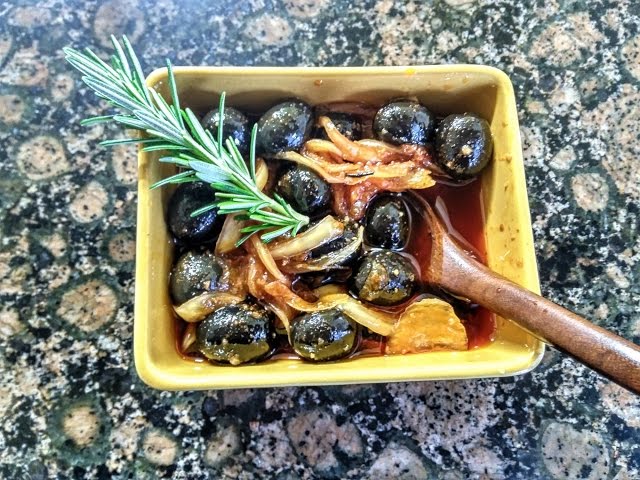
Black olives with onion & paprika — the perfect simple start to any Spanish spread.
Read the story →
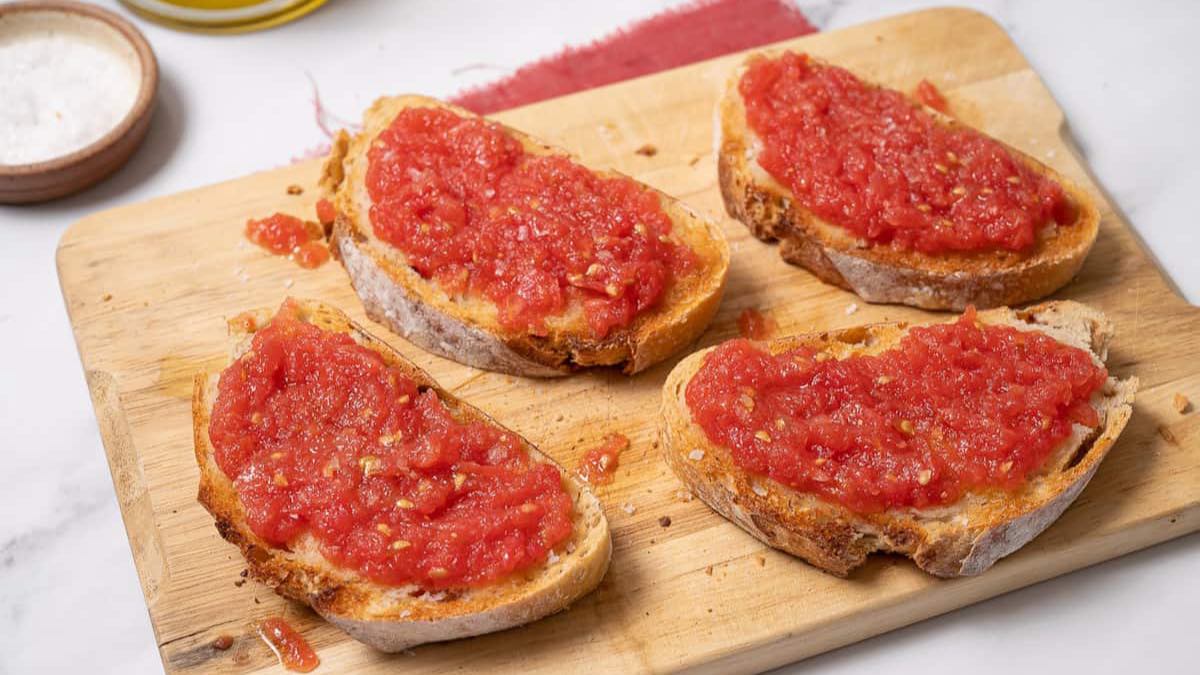
Toasted bread rubbed with ripe tomato, garlic, and the finest olive oil. A Spanish staple.
Read the story →
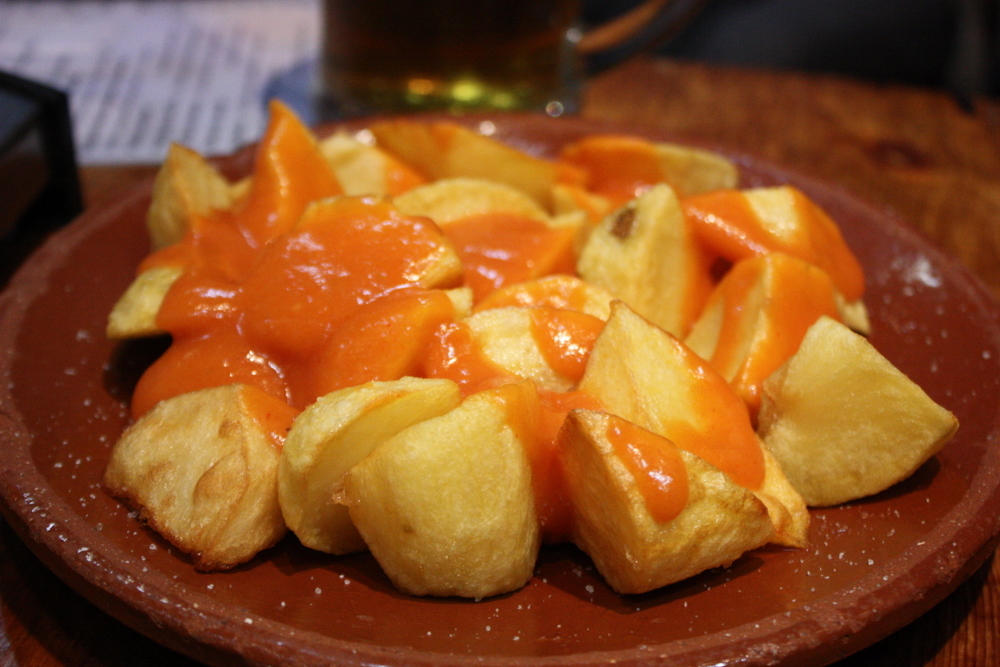
Crispy fried potatoes served with a smoky, spicy tomato sauce. Always the crowd favourite.
Read the story →
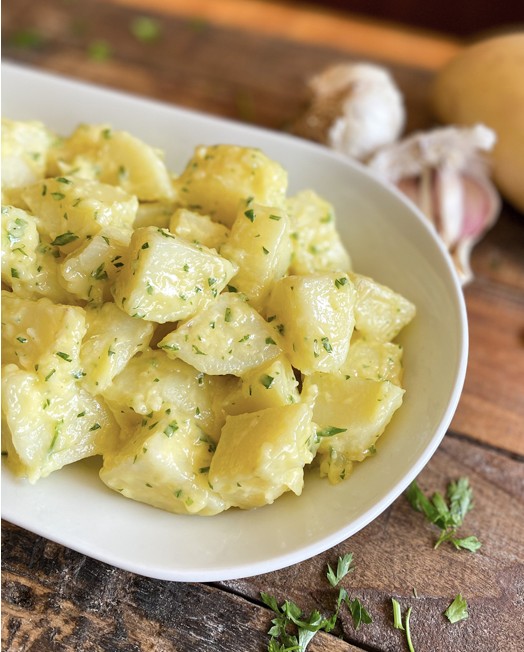
Tender potatoes coated in rich and creamy homemade garlic aioli.
Read the story →
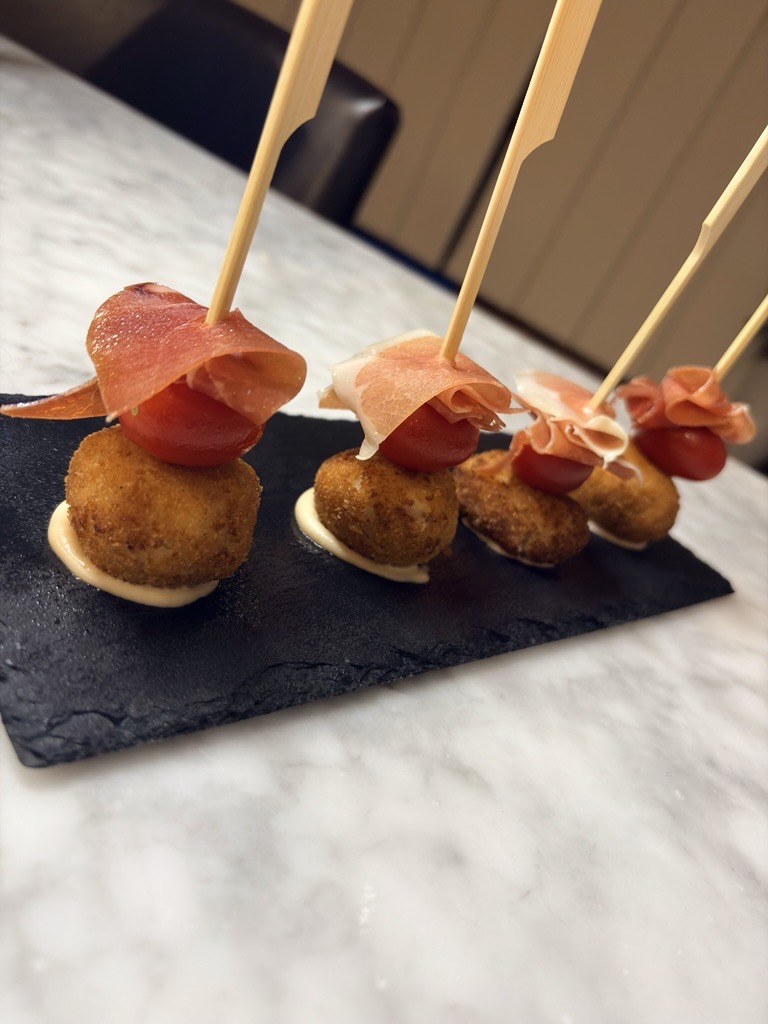
Creamy béchamel croquettes filled with Spanish Jamón Serrano — golden and irresistible.
Read the story →
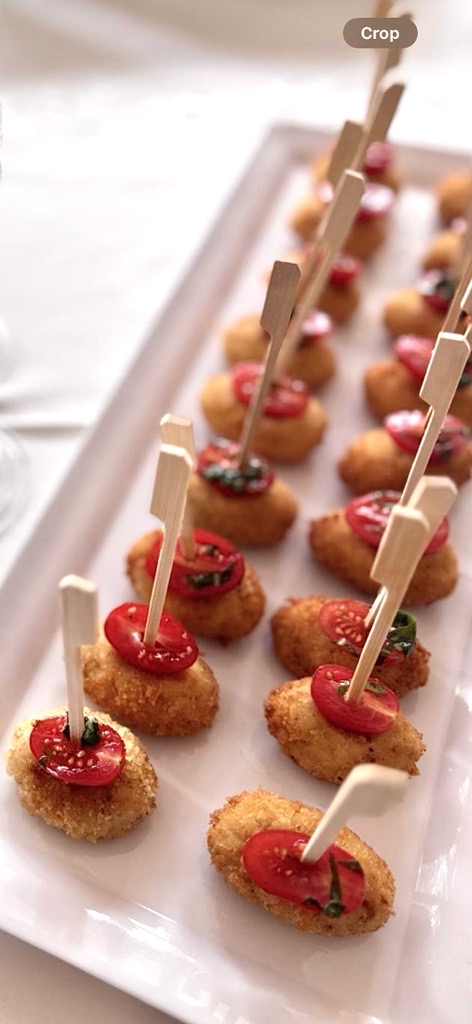
Creamy béchamel croquettes filled with flavourful roasted chicken.
Read the story →
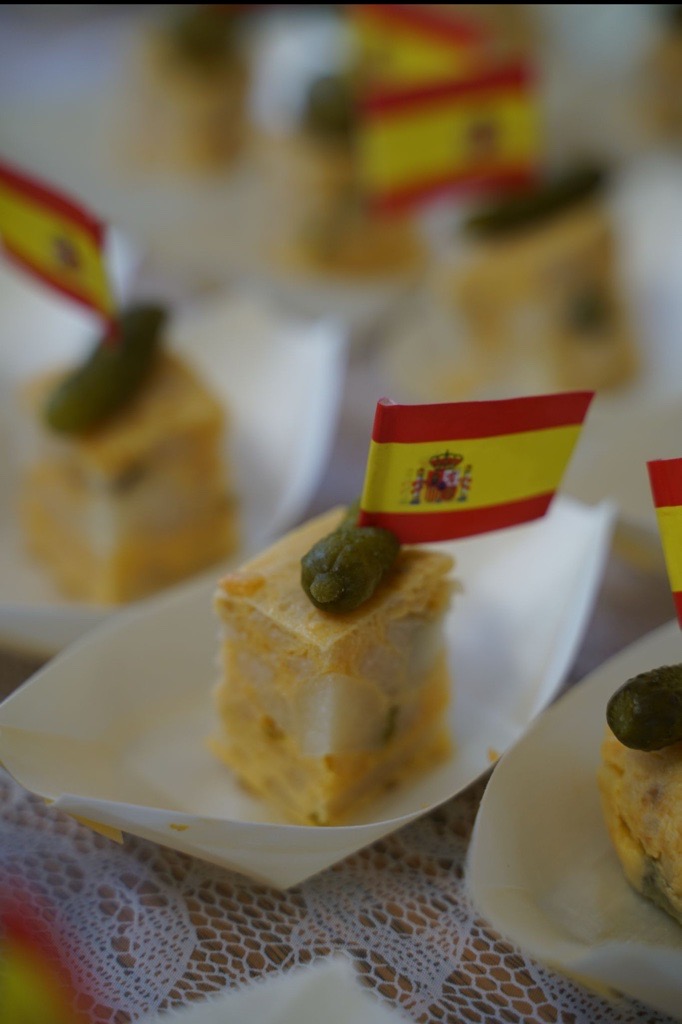
The classic Spanish omelette made with eggs and potatoes — also available with chorizo.
Read the story →
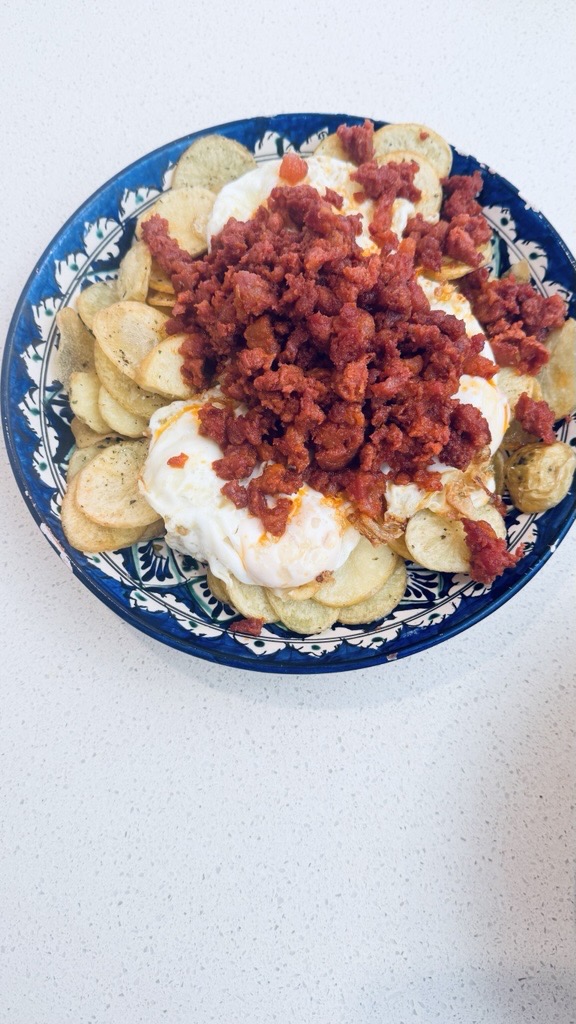
Crispy potatoes topped with runny fried eggs and your choice of jamón, chorizo, or prawns pil-pil.
Read the story →
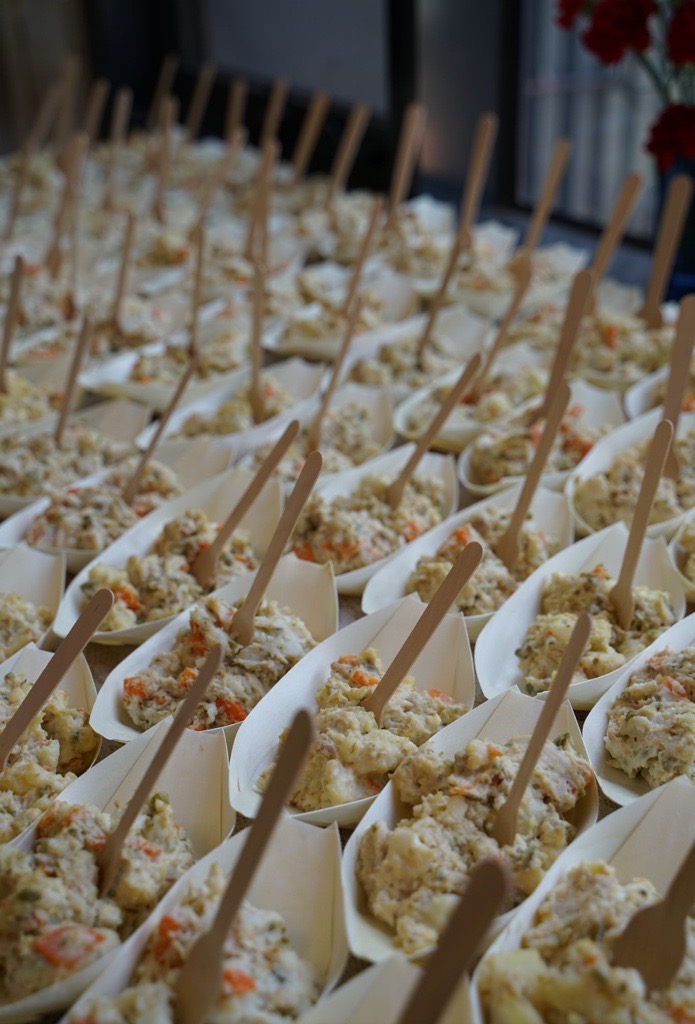
Creamy potato salad with tuna, peas, carrots and mayo, topped with roasted red peppers and olives.
Read the story →
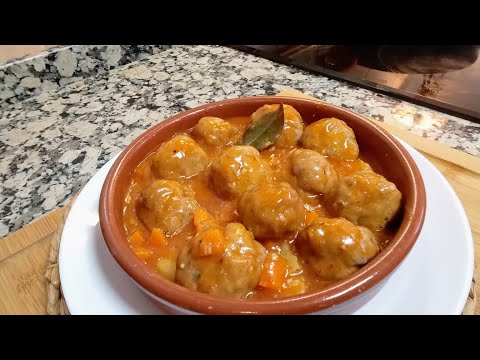
Juicy Spanish meatballs simmered low and slow in a rich tomato and wine sauce.
Read the story →
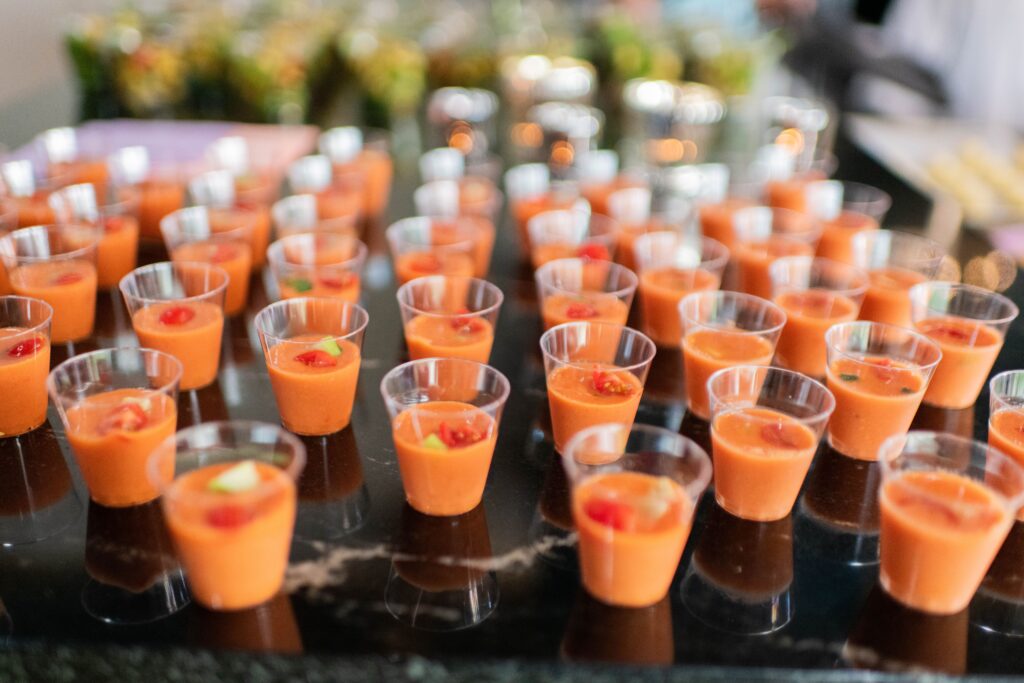
Chilled Andalusian soup of ripe tomato, cucumber, capsicum and sherry vinegar — no stove required.
Read the story →
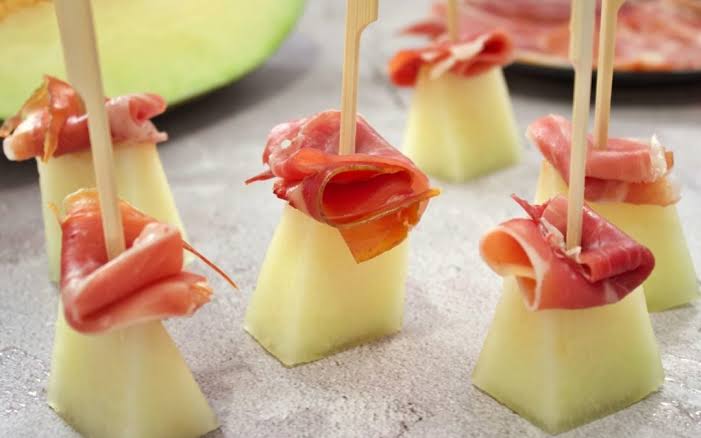
Sweet rockmelon wrapped in paper-thin cured jamón — a classic sweet-and-salty pairing.
Read the story →Our premium selection — available in the El Chef's Premium package or as add-ons at $12.50pp.
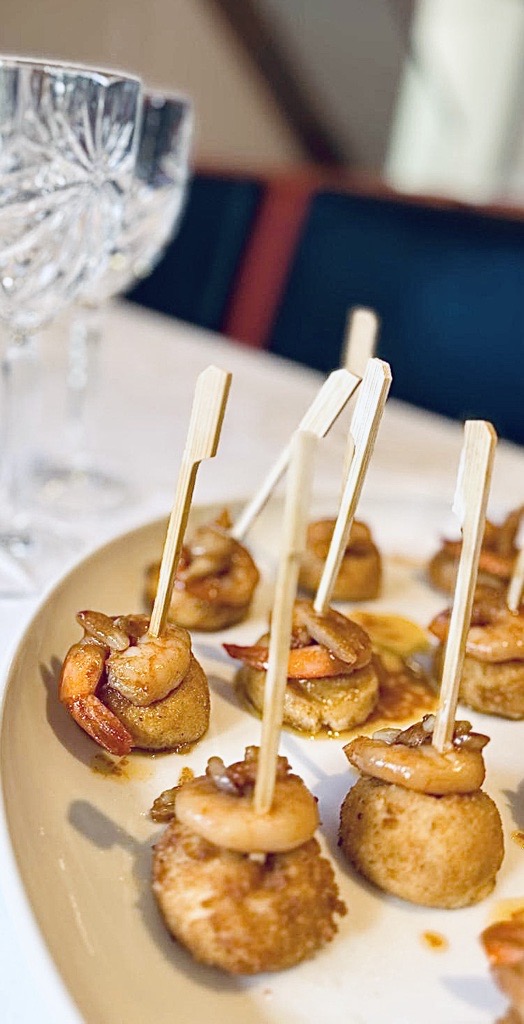
Creamy béchamel croquettes filled with plump, flavourful prawns.
Read the story →
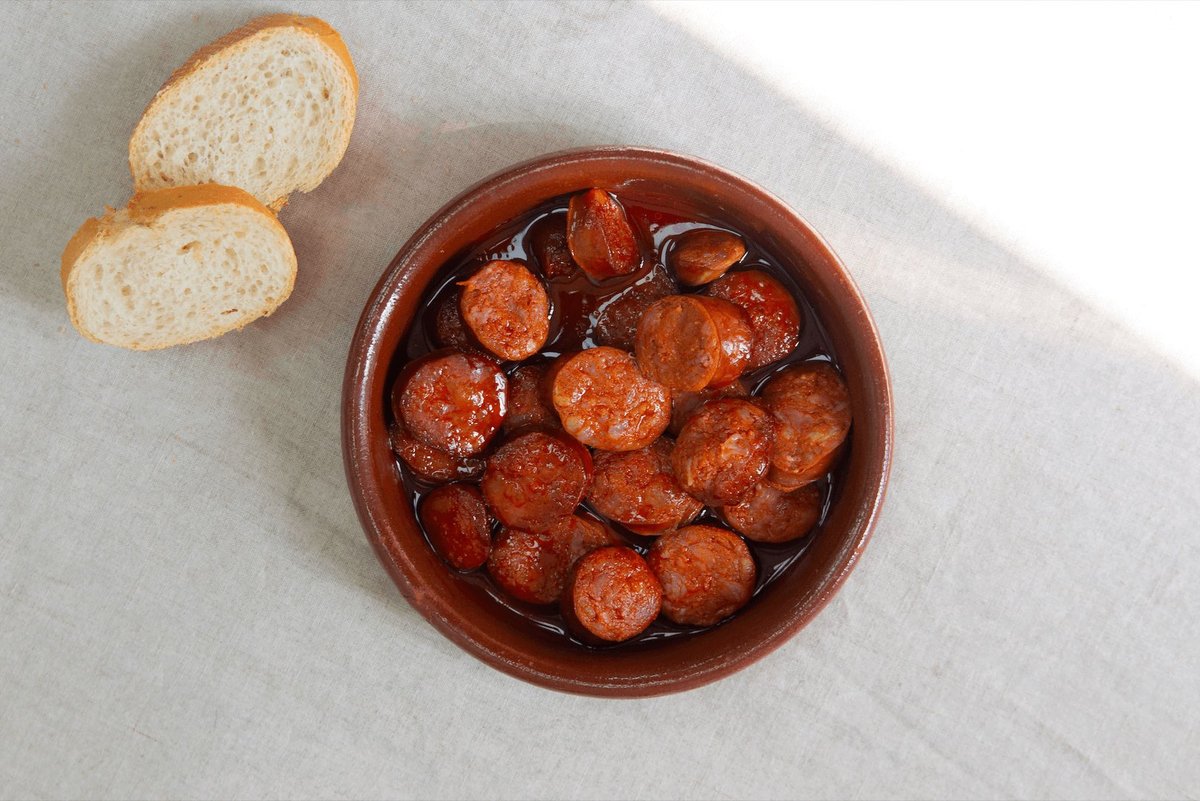
Spicy Spanish chorizo simmered in tangy apple cider — smoky, sweet and deeply satisfying.
Read the story →
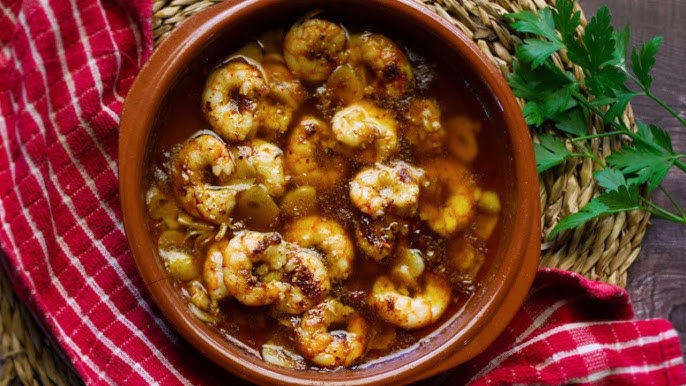
Juicy prawns sautéed in garlic, chili, and olive oil, served sizzling hot at the table.
Read the story →
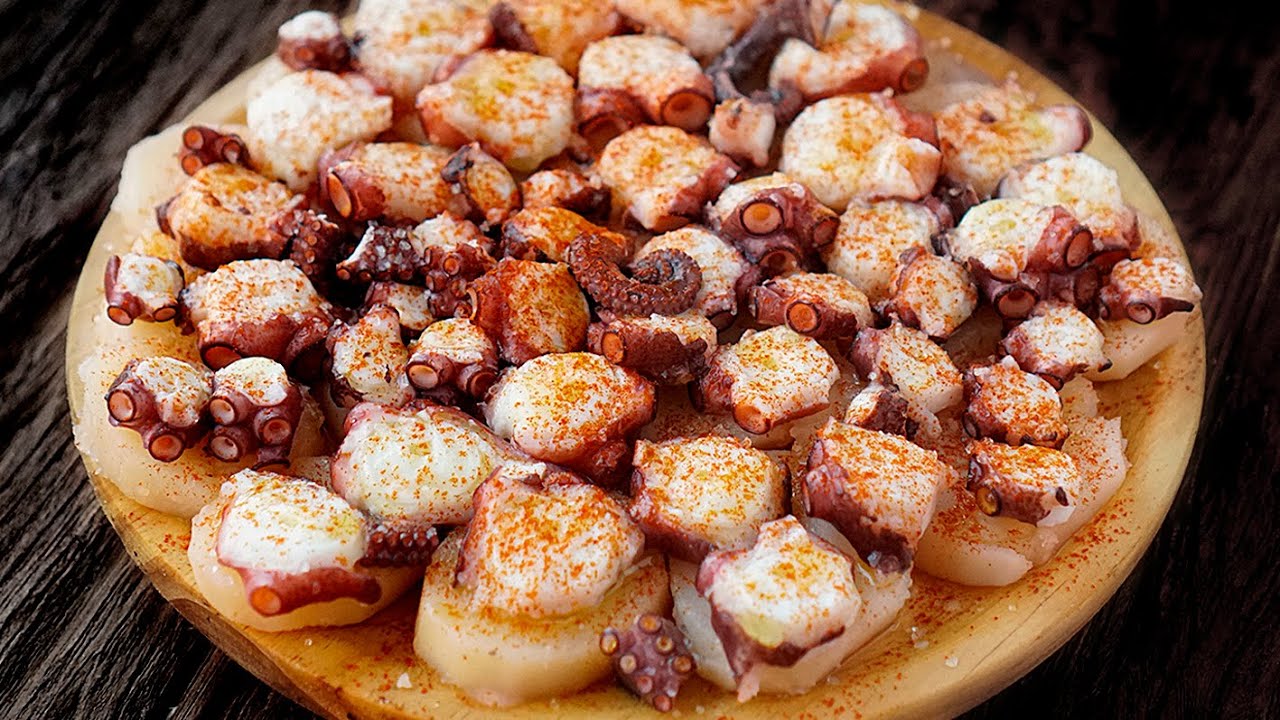
Tender octopus over sliced potatoes, drizzled with olive oil, smoked paprika and sea salt. A true Spanish classic.
Read the story →Whether it's a birthday, corporate lunch or private dinner — our tapas are the perfect addition to any Melbourne gathering.
Get a Free Quote
This is the first thing that hits the table at almost any Spanish gathering — a small dish of marinated black olives, set out while drinks are being poured and everything else is still being cooked. It asks nothing of the kitchen and everything of patience, since the olives are better the longer they've sat.
Ours are tossed with finely diced onion, sweet smoked paprika, garlic and a splash of sherry vinegar, then left to marinate rather than served straight from the jar. It's a small step that most places skip, and it's the difference between an afterthought and something guests actually reach for twice.
A bar in Spain without a dish of olives on the counter isn't really open yet.
At Tapas Madriz, this is the tapa that opens the table before the paella pan even goes on — sharp, salty, and exactly what a palate wants before the richer dishes arrive.
Found on every bar counter across Spain, in one marinade or another
Marinated in advance — flavour builds the longer it sits
Sharp, salty and acidic — the perfect opener before richer tapas
Ask any Spaniard to name the one tapa they could never live without, and nine times out of ten the answer is Patatas Bravas. Crispy on the outside, fluffy within, and blanketed in a smoky, slightly spicy tomato sauce — it is the dish that defines the Spanish bar experience.
The name tells you everything: bravas means brave or fierce — a nod to the bold, smoky sauce that coats the potatoes. At Tapas Madriz, this is one of the most requested tapas at Melbourne events. Simple in concept, extraordinary in execution.
There is no such thing as a bar in Madrid that doesn't serve Patatas Bravas. It is as essential to Spanish life as coffee in the morning or wine in the evening.
The Madrilenño version — which is what we serve — uses a deep, smoky tomato sauce made with smoked paprika, the version Ignacio grew up eating in Madrid. Potatoes are fried to order, and the bravas sauce is made from scratch — never from a jar.
Madrid, Spain — a capital city classic born in the 1960s
Smoky tomato bravas sauce made from scratch with smoked paprika
Crispy potato, soft interior and bold sauce — irresistible
There are few things simpler in Spanish cuisine than Pan Tumaca — toasted bread rubbed with ripe tomato, drizzled with olive oil, finished with a pinch of sea salt. And yet, in the hands of someone who does it well, it is one of the most satisfying things you can eat.
Pan Tumaca is the breakfast, the snack, the starter and the comfort food of Catalonia, where it originated. It is the dish every Spaniard makes at home without thinking — and the dish that every visitor to Spain falls instantly in love with.
The best food is often the simplest. Pan Tumaca proves that four ingredients — bread, tomato, olive oil, salt — can be more satisfying than a dish of a hundred components.
At Tapas Madriz, Pan Tumaca is served as part of every package — a nod to tradition and a reminder that Spanish food is at its heart about quality ingredients treated with respect.
Catalonia, Spain — though now beloved across the entire country
Toast rubbed with raw garlic then ripe tomato — never spreads or sauces
Quality olive oil and perfectly ripe tomatoes make all the difference
Patatas Alioli sits right next to Patatas Bravas on most Spanish menus, and it's usually the one that gets overlooked — no bright sauce, no heat, nothing performing for attention. It's just crisp roasted potato and a generous coat of garlic mayonnaise, and it has its own quiet following of people who order it every single time.
The alioli is whipped fresh — grated garlic and lemon worked through good mayonnaise until it's assertive enough to actually taste, not just a background note. The potatoes are roasted, not fried, so the contrast is a crisp, golden edge against a fluffy centre, all carrying that garlic hit.
Bravas gets the reputation. Alioli gets ordered again.
It's the tapa we'd put in front of someone who says they don't want anything too rich or too spicy — proof that restraint can still taste like a lot.
Spain-wide — the quieter alternative to bravas on most tapas menus
Fresh garlic and lemon whipped into good mayonnaise — made in-house
Crisp roasted potato and assertive garlic — no sauce theatrics needed
The Spanish croqueta is one of the great pleasures of the tapa world — a crisp golden shell giving way to a molten, creamy interior. And when that interior is perfumed with the deep, nutty flavour of aged Jamón Serrano, the result is something close to perfect.
Croquetas de Jamón are made with a rich béchamel sauce loaded with finely chopped jamón, chilled until firm, then rolled, breadcrumbed and fried to order. The contrast between the crunchy exterior and the yielding, flavourful centre is what makes them so addictive.
A great croqueta is judged by its filling and its crust in equal measure. The béchamel must be silky, the jamón generous, and the fry golden without a trace of grease.
At Tapas Madriz, our croquetas are made from scratch using authentic Spanish Jamón Serrano — one of Spain's most prized ingredients. They are, without question, one of the most popular tapas at every Melbourne event we cater.
Spain — the croqueta is found in every bar from Madrid to Seville
Rich béchamel, real jamón, breadcrumbed and fried to order
Authentic Spanish Jamón Serrano — aged and deeply flavourful
If the Croqueta de Jamón is the classic, then the Croqueta de Pollo is its equally beloved sibling — a little lighter, a little milder, and every bit as satisfying. Made with slow-roasted chicken folded into a creamy béchamel, it is the tapa that converts even the most hesitant croqueta newcomer.
The chicken is cooked low and slow until it pulls apart easily, then folded generously into the béchamel base. The result is a filling that is rich without being heavy, with the deep savouriness of roasted chicken running through every bite.
The croqueta de pollo is the tapa that grandmothers make on Sundays in Spain. It carries the warmth of a home kitchen — crisp on the outside, tender and comforting within.
At Tapas Madriz, our Croquetas de Pollo are made fresh for every event — never frozen, never reheated. When served warm from the fryer at a Melbourne gathering, they disappear from the plate faster than almost anything else we make.
Spain — a Sunday staple in homes across the country
Slow-roasted chicken in rich, creamy béchamel
Golden, crispy outside — silky, flavourful inside
Ask a Spaniard what the national dish of Spain is, and many will bypass paella entirely and say Tortilla Española. This simple omelette of eggs and potatoes — sometimes onion, sometimes not, a debate that divides the nation — is the backbone of Spanish home cooking and bar culture alike.
A great Tortilla Española is deceptively difficult to make well. The potatoes must be slowly confit in olive oil until tender and sweet. The eggs must be beaten just enough. And the flip — the defining moment of any tortilla — requires confidence and precision in equal measure.
In Spain, a tortilla is never just an omelette. It is a conversation starter, a comfort food, a midnight snack and a Sunday lunch all at once. It is, in the most literal sense, home.
At Tapas Madriz, our Tortilla Española is made the traditional way — thick, set just through the centre, with that characteristic golden exterior. Available with chorizo for those who want a little more depth of flavour.
Navarra, Spain — first recorded in the early 19th century
With or without onion? Spain is divided. We leave that to you.
The defining moment — confidence and a steady hand required
The name means 'broken eggs' — and the breaking of the yolk is the whole point. Huevos Rotos is a dish that rewards impatience. A bed of crispy fried potatoes, topped with a runny fried egg, broken at the table so the golden yolk cascades over everything beneath it.
Add jamón, chorizo or prawns pil-pil and you have one of the most satisfying and indulgent tapas in the entire Spanish repertoire. It is the dish people order when they want something deeply comforting and unapologetically delicious.
Breaking the yolk is not an accident — it is the moment the dish comes alive. The golden river of egg transforms everything it touches into something magnificent.
At Tapas Madriz, Huevos Rotos is made with golden crispy potatoes and perfectly fried eggs with runny yolks, served with your choice of topping. At Melbourne events, it is the tapa that consistently draws the biggest gasps when it arrives at the table.
Madrid, Spain — a modern classic now found across the country
Perfectly runny yolk — the moment you break it is everything
Jamón, chorizo or prawns pil-pil — all exceptional
Despite its name — Russian salad — Ensaladilla Rusa is one of the most quintessentially Spanish tapas you will find. Creamy, hearty and deeply comforting, it has been a fixture of the Spanish tapa bar for well over a century and shows no sign of going anywhere.
The Spanish version of this classic transforms the original with the addition of tuna, roasted red peppers, briny olives and a generous hand with the mayonnaise. The result is something richer and more flavourful than its Eastern European ancestor — unmistakably Spanish in character.
The Ensaladilla Rusa is the tapa that surprises people. They expect something ordinary and instead find something deeply satisfying — a dish that has earned its place at the Spanish table through decades of quiet excellence.
At Tapas Madriz, our Ensaladilla Rusa is made fresh for every event — creamy, well-seasoned and finished with roasted red peppers and olives. It is a tapa that carries beautifully alongside the bolder flavours on the table.
Russia via France — adopted and transformed by Spain into something entirely its own
Tuna, roasted peppers and olives set it apart from all other versions
Creamy, savoury and deeply satisfying — the perfect contrast to richer tapas
Every great city has its meatball. Madrid's version — Albóndigas a la Madrileña — is simmered low and slow in a rich sauce of tomatoes, white wine, saffron and bay leaves until the meatballs are impossibly tender and the sauce has reduced to something deeply savoury and complex.
The name is specific: a la Madrileña means in the style of Madrid, distinguishing these from the many other Spanish meatball traditions. The Madrileño sauce is richer and more aromatic than most — the saffron giving it a subtle golden warmth that elevates the whole dish.
A pot of Albóndigas a la Madrileña simmering on the stove is one of the great smells of a Madrid kitchen. The aroma of tomato, wine and saffron means one thing — dinner is going to be exceptional.
At Tapas Madriz, our Albóndigas are made with the same care and the same recipe that defines Madrid's kitchen heritage. Served in a terracotta dish with good bread to mop up the sauce, they are one of the most warming and satisfying tapas on our menu.
Madrid, Spain — a true capital city classic with Arab culinary roots
Slow-cooked tomato, white wine, saffron and bay leaf
The golden spice that gives the Madrileño sauce its distinctive warmth
Every Spanish menu needs one dish that doesn't touch a stove, and this is ours. Gazpacho is blended the morning of your event and served properly cold — which makes it one of the few tapas on this list that's genuinely built for a hot Melbourne afternoon rather than fighting against one.
Some guests know it as a soup, some as a drink — in parts of southern Spain it's poured into small glasses and sipped between courses rather than spooned from a bowl. At your event it's plated as a chilled starter, finished with a small scatter of finely diced capsicum, cucumber and onion on top for crunch.
A well-made gazpacho shouldn't need a spoon at all — thin enough to drink, thick enough to still taste like a tomato.
It's a quiet dish next to the fried and grilled tapas on the rest of the menu, but it's the one guests come back to first when the weather turns warm.
Andalucía — southern Spain's hottest, driest region
Summer events, outdoor receptions, anything in the midday sun
None — blended and chilled, no stove involved
Two ingredients, no cooking, and one of the oldest combinations in Spanish food — ripe rockmelon cut into wedges and wrapped in paper-thin cured jamón. The salt of the ham against the sweetness of the melon is the entire point; nothing else touches the plate.
It's a natural fit for canapé service — plated as individual skewered bites, easy to pick up mid-conversation without cutlery. At events with a mixed crowd, it tends to be the tapa that surprises people who weren't expecting a sweet-and-savoury pairing to work this well.
Good jamón needs almost nothing done to it. Melon is one of the few things confident enough to sit next to it and not get overpowered.
The only real skill involved is buying well — a melon that isn't ripe enough will taste like nothing next to the ham, so this is one of the few tapas where the produce, not the technique, decides whether it works.
Just two — ripe rockmelon and thinly sliced cured jamón
Canapé service — easy to plate on skewers for mingling
Salt against sweetness — one of Spain's oldest flavour pairings
If the Croqueta de Jamón is the classic, then the Croqueta de Gambas is the premium upgrade — a more delicate, more luxurious version that showcases the natural sweetness of fresh prawns encased in a silky béchamel.
The prawns are sautéed in butter and garlic before being folded into the béchamel, infusing the filling with a rich seafood flavour that is subtler and more refined than its jamón counterpart. The result is a croqueta of real elegance — crisp, golden and filled with the taste of the sea.
The Croqueta de Gambas is the one that makes people stop mid-conversation. The first bite — that moment when the golden crust gives way to the creamy prawn filling — is a genuine revelation.
At Tapas Madriz, our Croquetas de Gambas are available as part of the El Chef's Premium package or as an add-on — and they are always the first premium tapa to disappear at Melbourne events.
Spain's coastal regions — where fresh seafood meets classical technique
Fresh prawns sautéed in garlic butter folded into silky béchamel
Available in El Chef's Premium package or as an add-on at $12.50pp
From the green hills of Asturias in northern Spain comes one of the most flavourful and unexpected combinations in the tapa world — spicy Spanish chorizo slow-simmered in tangy apple cider. The result is a dish where the smokiness of the chorizo and the tartness of the cider balance each other in the most extraordinary way.
Chorizo a la Sidra originates in Asturias, Spain's premier cider-producing region, where sidra — slightly effervescent, dry apple cider — is poured into everything from glasses to cooking pots. When chorizo meets Asturian cider in a hot pan, something magical happens — the fat renders, the cider reduces, and the sauce becomes rich, tangy and deeply savoury.
In Asturias, cider is not just a drink — it is an ingredient, a tradition, and a way of life. Chorizo a la Sidra captures that spirit in every mouthful.
At Tapas Madriz, Chorizo a la Sidra is one of our most talked-about premium tapas at Melbourne events. Served with good bread to mop up the sauce, it is the kind of dish that makes guests lean across the table and ask what on earth is in it.
Asturias, northern Spain — the cider capital of the country
Dry Spanish apple cider — tangy, slightly effervescent and perfect for cooking
Available in El Chef's Premium package or as an add-on at $12.50pp
Few dishes in Spanish cuisine announce themselves quite like Gambas al Pil-Pil. The moment the prawns hit the hot olive oil infused with garlic and chili, the event fills with an aroma so enticing that guests start gravitating towards the pan before the dish is even plated.
Pil-pil refers to the bubbling, sizzling sound the prawns make as they cook in the hot oil — a sound so associated with pleasure and anticipation that the name became the dish. Served sizzling hot, still bubbling at the table.
The sound of pil-pil is the sound of happiness in Spain. It means something delicious is about to arrive at your table, still sizzling.
The key to the dish is heat and timing. The oil must be smoking hot before the prawns go in, so they sear rather than steam — developing a slight caramelisation on the outside while remaining perfectly tender within.
Coastal regions of Spain — fresh seafood meets perfect simplicity
Smoking hot olive oil, golden garlic and fresh prawns — perfectly timed
Available in El Chef's Premium package or as an add-on
In the green, rainy northwest corner of Spain lies Galicia, home to some of the country's most distinctive food. And of all Galicia's culinary gifts, none has earned more devotion than Pulpo a la Gallega.
Tender octopus, slow-cooked until silky and yielding, sliced and arranged over waxy potatoes, drizzled with the finest olive oil and finished with a generous dusting of smoked paprika and sea salt. One of the most visually striking dishes in all of Spanish cuisine.
Pulpo a la Gallega is the dish that converts people. One bite and the fear of octopus disappears. What's left is one of the most memorable flavours of a lifetime.
At Tapas Madriz, our Pulpo a la Gallega is our most premium tapa — and the one that most often surprises guests who've never tried octopus before. The texture, when cooked properly, is nothing like the chewy experience people fear. Tender, almost buttery, with a clean oceanic sweetness.
Galicia, northwest Spain — one of Europe's great undiscovered food regions
Slow-cooked until perfectly tender — patience is everything
Pimentón de la Vera, finest olive oil and sea salt. Nothing more needed.