I grew up eating paella in Madrid. My grandmother made it on Sundays, my father made it at family gatherings, and I learned to cook it properly before I could drive. So when I moved to Melbourne and started catering events, I noticed something: most people have eaten what is called paella, but very few have eaten a real one.
That's not a criticism. It's just that paella has become one of those dishes that travels far from home and changes along the way. By the time it arrives at a buffet table, it often bears only a passing resemblance to what's made in Valencia or Madrid. This guide explains what actually makes a paella authentic — so you know what you're tasting, and what to look for when you're choosing a caterer.
It starts with the pan
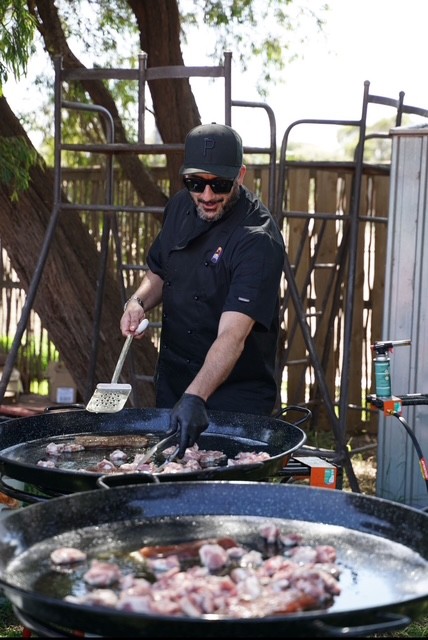
The word paella is Valencian for pan — specifically, the wide, shallow, flat-bottomed pan the dish is cooked in. This isn't just traditional aesthetics. The shape is functional: a wide surface area means the rice spreads thin, cooking quickly and evenly, and the base gets maximum contact with the heat. This is how you develop the socarrat — the crispy, caramelised crust of rice at the bottom that is, arguably, the most prized part of the dish.
If your paella is made in a deep pot, a wok, or a casserole dish, it's not a paella. It's rice stew. Good rice stew, perhaps — but not the same thing.
"The socarrat is what separates a paella made by someone who knows what they're doing from one that doesn't."
— Ignacio, Tapas MadrizThe rice matters enormously
Paella rice needs to be short-grain and high-starch. The classic varieties are bomba and calasparra — both Spanish, both grown in the same Valencia region where paella originated. These varieties absorb stock at twice the rate of long-grain rice while still holding their shape, giving each grain a distinct, al dente bite rather than turning mushy.
Substituting jasmine, basmati, or generic supermarket white rice is the single fastest way to produce a disappointing paella. The grain won't absorb the flavour correctly, the texture will be wrong, and the socarrat won't form properly. Authentic paella uses authentic rice. It's not a detail — it's the foundation.
Saffron: the heart of the colour and flavour
The golden-yellow colour of a traditional paella comes from saffron — the world's most expensive spice, harvested by hand from crocus flowers in La Mancha and other parts of Spain. A small amount dissolved in warm stock gives paella its characteristic colour and a subtle, honeyed, slightly metallic flavour that is impossible to replicate with anything else.
Some caterers substitute turmeric or food colouring to achieve the yellow colour at much lower cost. The visual result can look similar. The taste is not. Turmeric is earthy and bitter; it doesn't have the depth or complexity of saffron, and anyone who has eaten a proper paella will notice the difference immediately.
At Tapas Madriz, we use genuine Spanish saffron. It costs more. It's non-negotiable.
The sofrito: building the base
Before the rice goes in, a great paella starts with a sofrito — a slow-cooked base of tomato, onion, garlic, and paprika cooked in olive oil until deeply concentrated and sweet. This is where the flavour architecture of the dish is built. Rush the sofrito or skip it, and the finished paella will taste flat regardless of what else goes in.
This is also why a pre-made, reheated paella will never taste as good as one cooked live. The sofrito can't be prepared in advance and refrigerated. It needs to be built in the pan, with the stock added at the right moment, and the rice introduced just as the base reaches the correct depth of flavour.
Saffron
Real Spanish saffron — not turmeric, not colouring. Dissolved in warm stock before adding.
Sofrito
Slow-cooked tomato, garlic, and paprika base. The flavour foundation of the dish.
Bomba rice
Short-grain, high-starch Spanish rice. Absorbs double the stock. Never mushy.
Olive oil
Extra virgin, Spanish if possible. Used generously — this is not a low-fat dish.
Fresh protein
King prawns, mussels, calamari (seafood) or chicken thighs, chorizo (meat). Never frozen.
Lemon
Served on the side to squeeze over. The acid cuts through richness and brightens every bite.
Common myths about paella
A few things you may have heard that aren't quite right:
| The myth | The reality |
|---|---|
| "Paella is a seafood dish" | The original Valencian paella was made with rabbit and chicken. Seafood paella (paella de marisco) is a popular variation, not the original. |
| "Paella should be stirred continuously" | The opposite is true. Once the rice is added, paella is not stirred. Stirring releases starch and prevents the socarrat from forming. |
| "Chorizo is a traditional paella ingredient" | Purists will argue it isn't — the smokiness can overwhelm the saffron. That said, chicken and chorizo paella is delicious and widely made throughout Spain. |
| "Yellow means saffron" | Yellow can also mean turmeric or food colouring. Ask specifically whether the caterer uses real saffron. |
| "You can make paella ahead and reheat it" | You can, but the socarrat will be lost, the rice will overcook, and the fresh flavours will dull. A live paella is categorically better. |
The socarrat: the mark of a master
If you want to know whether a paella was made well, look at the bottom. The socarrat — from the Valencian word meaning "slightly burnt" — is the layer of crispy, golden-brown rice that forms when the stock has been fully absorbed and the heat is high enough to caramelise the starches at the base of the pan.
Achieving a good socarrat requires judgement. Too little heat and it won't form. Too much and it burns. The right socarrat is deeply golden, slightly crunchy, intensely flavoured — concentrated versions of everything the paella has been cooking in. Experienced diners scrape it from the bottom of the pan. It's the best part.
How to check at a catering event: When the paella is served, look at the base of the pan. A properly made live paella will show a visible golden crust. If the pan is clean and white underneath, no socarrat formed — either the paella was pre-cooked and reheated, or the technique wasn't right.
Why live cooking makes the difference
Everything above explains why live paella is so much better than pre-made paella. The sofrito needs to be cooked fresh in the pan. The rice needs to absorb stock as it's being made, not sitting in liquid that it's already absorbed. The socarrat forms in the final minutes over direct heat. None of this can be replicated by making the dish hours earlier and reheating it.
When we cook at your event, you're watching the actual process — the sofrito going down, the saffron-yellow stock being added, the steam rising as the rice begins to absorb. People gather around. They ask questions. They smell the saffron before they've tasted anything. This is what we mean when we say paella is theatre as much as food.
It's also why, when you're comparing catering quotes, "will you cook it live on-site?" is the most important question you can ask.
Booking a paella caterer? Ask these three questions: Do you cook live on-site? Do you use real saffron? Do you use Spanish bomba or calasparra rice? If any answer is no or vague, you're not getting an authentic paella.