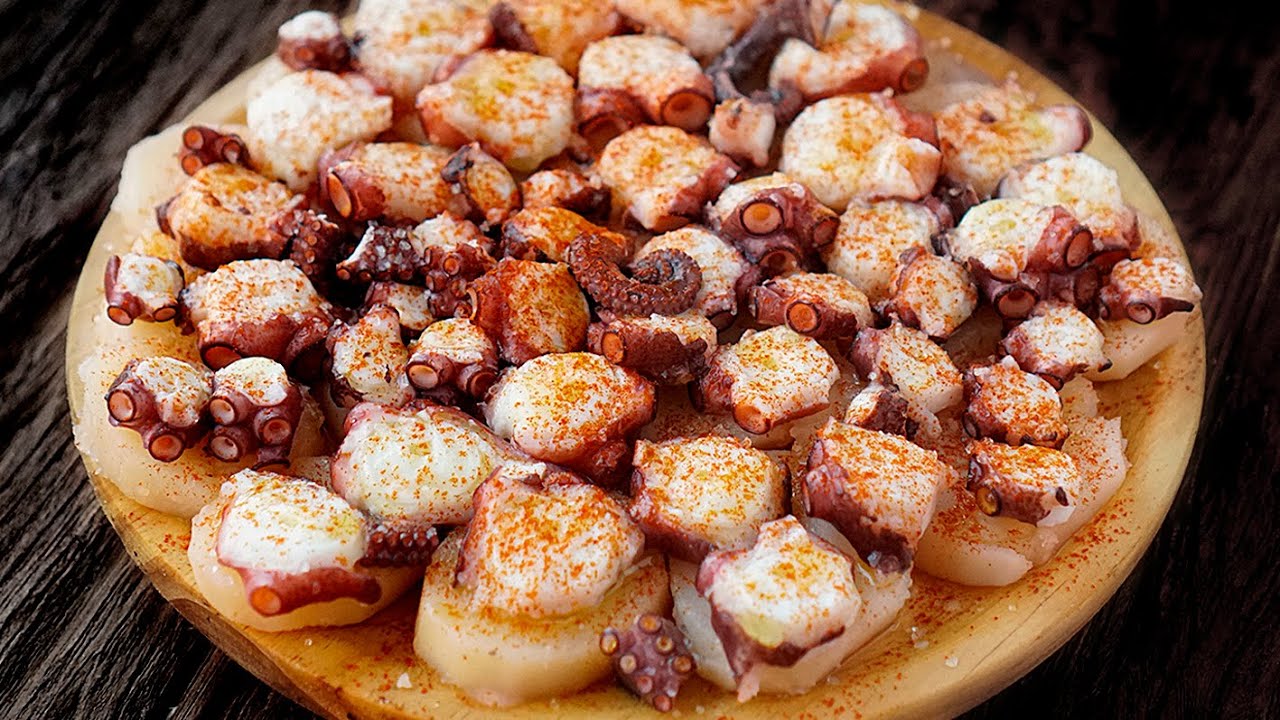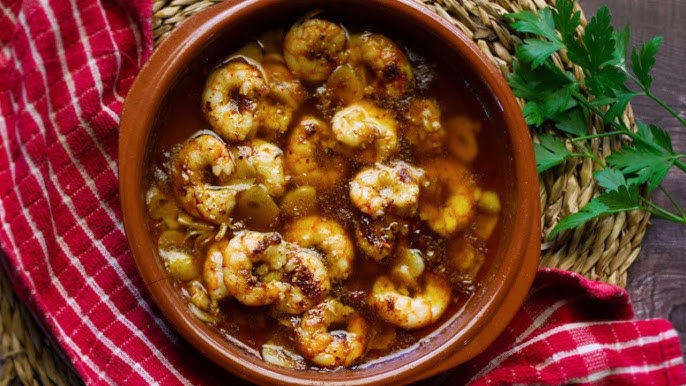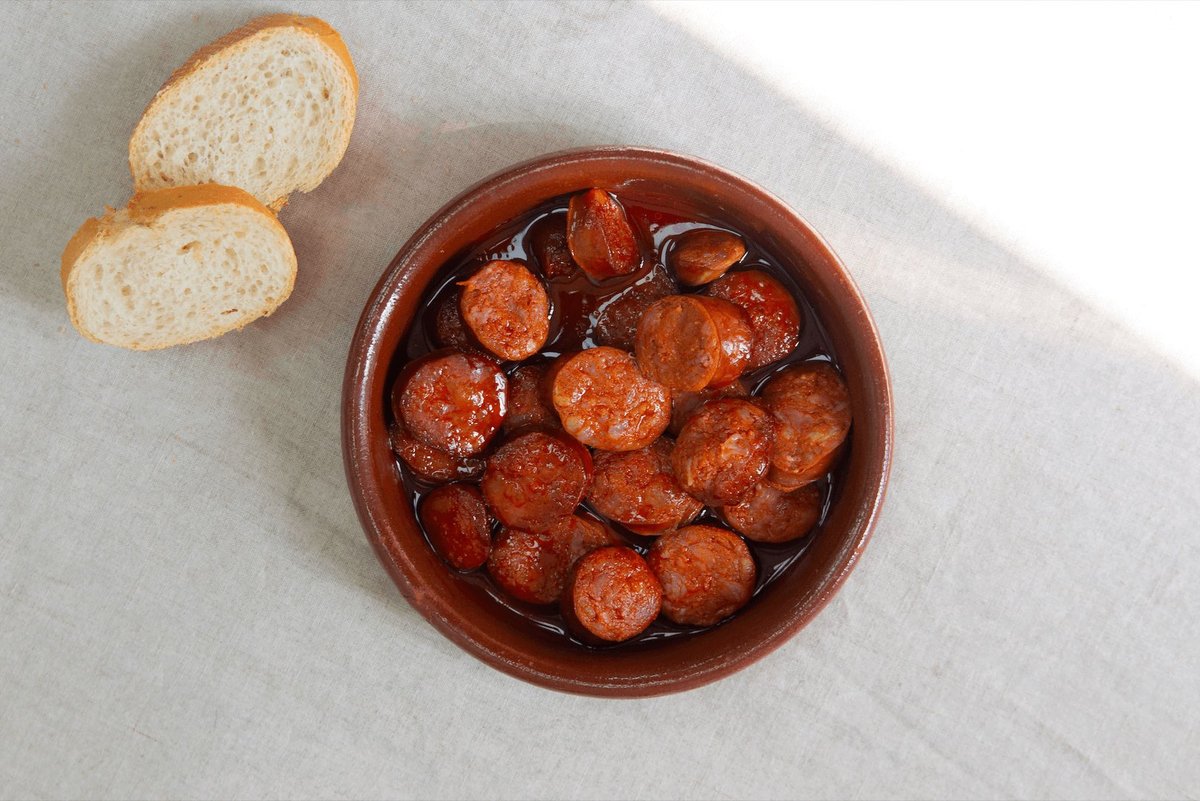
Along the Spanish coastline, where fishing villages still wake before dawn and the catch dictates the menu, salpicón has been a staple for centuries. Not as a simple salad — but as a considered preparation where acid, fat and temperature conspire to transform fresh seafood into something far greater than the sum of its parts.
Salpicón de Pulpo y Gambas combines tender braised octopus with briefly poached prawns, bound in a sherry vinegar vinaigrette and scattered with roasted red pepper, finely diced onion and flat-leaf parsley. It is served chilled, always — and that chill is fundamental. The cold tightens the dressing around each piece of seafood, concentrating the flavours in a way that a room-temperature dish simply cannot replicate.
Ingredients
- 500g cleaned octopus tentacles
- 300g raw medium prawns, peeled and deveined
- 1 roasted red pepper (jarred is fine), finely diced
- 1 small Spanish onion, very finely diced
- 1 small green capsicum, very finely diced
- 3 tbsp extra virgin olive oil
- 2 tbsp sherry vinegar
- 1 tsp Dijon mustard
- Small handful flat-leaf parsley, roughly chopped
- Sea salt and freshly cracked black pepper
Method
- Bring a pot of salted water to the boil. Add the octopus tentacles and simmer for 20–25 minutes until tender when pierced with a skewer. Remove and allow to rest for 10 minutes, then slice into bite-sized rounds.
- In the same or a fresh pot of lightly salted boiling water, cook the prawns for 2–3 minutes until just pink and curled. Drain immediately and halve lengthwise once cool enough to handle. Do not overcook — residual heat will finish them.
- In a bowl, whisk together the sherry vinegar, olive oil, Dijon mustard, a pinch of sea salt and a generous crack of black pepper until the dressing emulsifies into a cohesive whole.
- Combine the sliced octopus, prawns, roasted red pepper, Spanish onion and green capsicum in a large bowl. Pour the dressing over and toss with care — you want everything coated, not broken.
- Cover and refrigerate for at least 1 hour before serving, ideally 2. This resting period is not optional; it is the step that fuses the individual elements into a unified dish.
- Scatter with flat-leaf parsley and serve directly from the refrigerator with sliced crusty bread to absorb the dressing. Cold is non-negotiable.
Ignacio's tip: Use sherry vinegar, not white wine vinegar — the oxidative, nutty character of sherry vinegar is irreplaceable here and is what makes a salpicón taste distinctly Spanish rather than generically Mediterranean.
The Story Behind Salpicón
The word salpicón appeared in Spanish cookbooks as far back as the 17th century, originally referring to a cold dish of minced meat dressed with oil, vinegar and onion. Over time, coastal communities adapted it to whatever the sea provided — octopus, prawns, crab, clams — and the seafood version became the more celebrated of the two.
In Spanish coastal cooking, the vinaigrette is not a dressing — it is a marinade. Given enough time in the cold, it becomes the soul of the dish.
What sets a well-executed salpicón apart from a generic seafood salad is precision: the octopus must be genuinely tender (not chewy), the prawns just-cooked (not rubbery), the vegetables diced small enough to season each mouthful without dominating it, and the dressing balanced with enough acid to cut through the natural richness of both cephalopods and crustaceans.
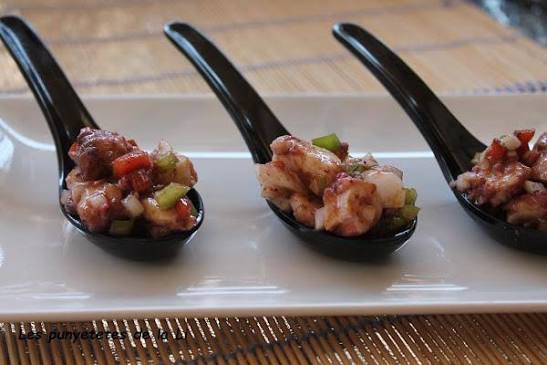
At Tapas Madriz events, Ignacio serves the salpicón plated individually — in small ceramic spoons or on slate — as part of a broader tapas spread. It functions as a palate-opener: cold and bright against the warmth of paella, chorizo and croquettes.
This is the home version
At your event, Ignacio prepares the salpicón in advance and brings it chilled — ready to be plated and served as part of a live catering spread across Melbourne.
See How It Works at Your Event Get a Quote