Classic Tapa
Melón con Jamón Catering — Melbourne
Two ingredients, no cooking — the tapa that proves restraint can be the whole recipe.
Two ingredients, no cooking — the tapa that proves restraint can be the whole recipe.
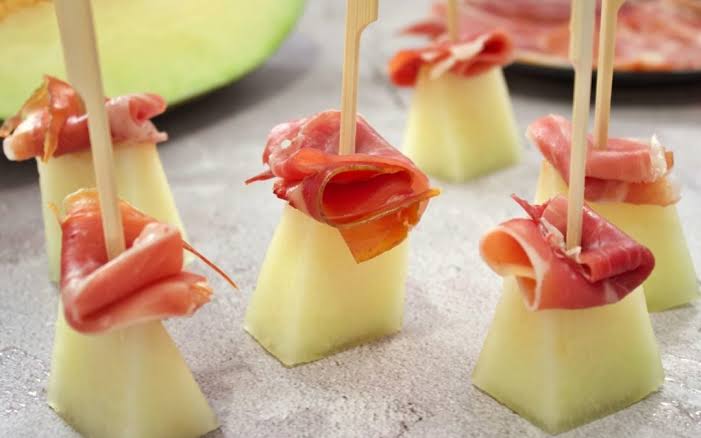
Sweet fruit against salt-cured meat is one of the oldest combinations in Mediterranean cooking, and Spain's version — rockmelon and jamón — has stayed almost untouched by trend for generations. There's no sauce, no seasoning beyond a crack of pepper, and no cooking at all. The pairing works because the two ingredients do opposite jobs: the melon cools and sweetens, the jamón salts and lingers.
What separates a good version from a forgettable one is almost entirely about sourcing rather than skill. Jamón serrano — air-dried, not smoked — is the standard cut for this dish; jamón ibérico, made from a specific breed of pig raised partly on acorns, is the more expensive step up, prized for a nuttier, more marbled fat that melts rather than chews.
It's traditionally served as an appetiser to open a meal, on the logic that a little salt and a little sweetness wakes up the appetite better than anything cooked.
Some dishes need a chef. This one needs a good butcher and a ripe melon — the kitchen barely gets involved.
Because nothing here is cooked, there's no reheating, no last-minute plating pressure, and no risk of anything drying out under a heat lamp. It's assembled fresh and served at room temperature, which makes it one of the most forgiving dishes on the menu for outdoor events where timing can slip.
The trade-off is that it hides nothing — an underripe melon or thick-cut, poor-quality jamón has nowhere to hide behind sauce or spice. When both are right, though, it's one of the simplest tapas to fall for.
Jamón serrano is standard; jamón ibérico is the premium, acorn-fed step up.
Room temperature, assembled fresh — never chilled straight beforehand.
Sweet against salty — restraint, not technique, is what makes it good.
Tapas Madriz brings authentic Spanish flavours to Melbourne — cooked live in front of your guests.
Get the Recipe Get a Free QuoteTapas Madriz Assistant
Online — ask me anything