Classic Tapa
Patatas Alioli Catering — Melbourne
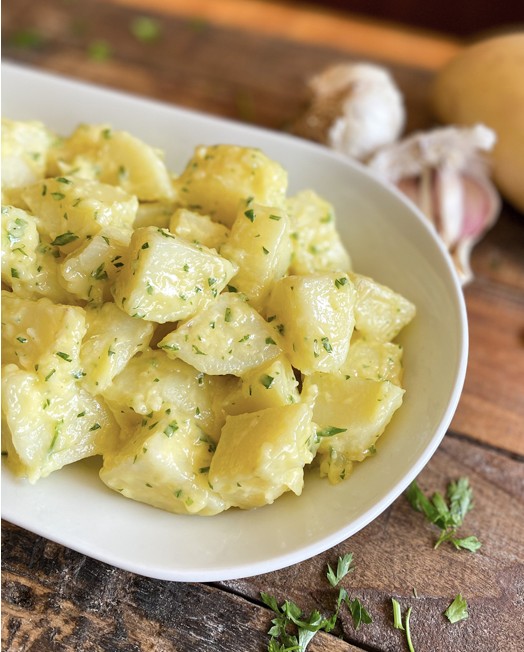
No sauce theatrics — just crisp potato and a sauce that means exactly what its name says.
No sauce theatrics — just crisp potato and a sauce that means exactly what its name says.
The name isn't marketing — all i oli is Catalan and Valencian for "garlic and oil," and that's originally all the sauce was: raw garlic pounded in a mortar and worked into olive oil until it emulsified into something thick and intensely pungent, with no egg at all. It's one of the oldest sauces in the western Mediterranean, with close cousins in southern France (aioli) and Italy (agliata) — all built on the same idea that garlic and good oil, given enough patience, can bind into something far more than the sum of two ingredients.
What most kitchens serve today, including ours, leans on egg — grated garlic and lemon worked into mayonnaise rather than a true oil emulsion. It's a more forgiving method and a more familiar texture, but it owes its entire logic to that older, egg-free original.
Either way, the test hasn't changed in centuries: it should taste unmistakably of garlic, not just carry a whisper of it.
A timid alioli isn't alioli — if you can't taste the garlic three bites in, something's gone wrong in the kitchen.
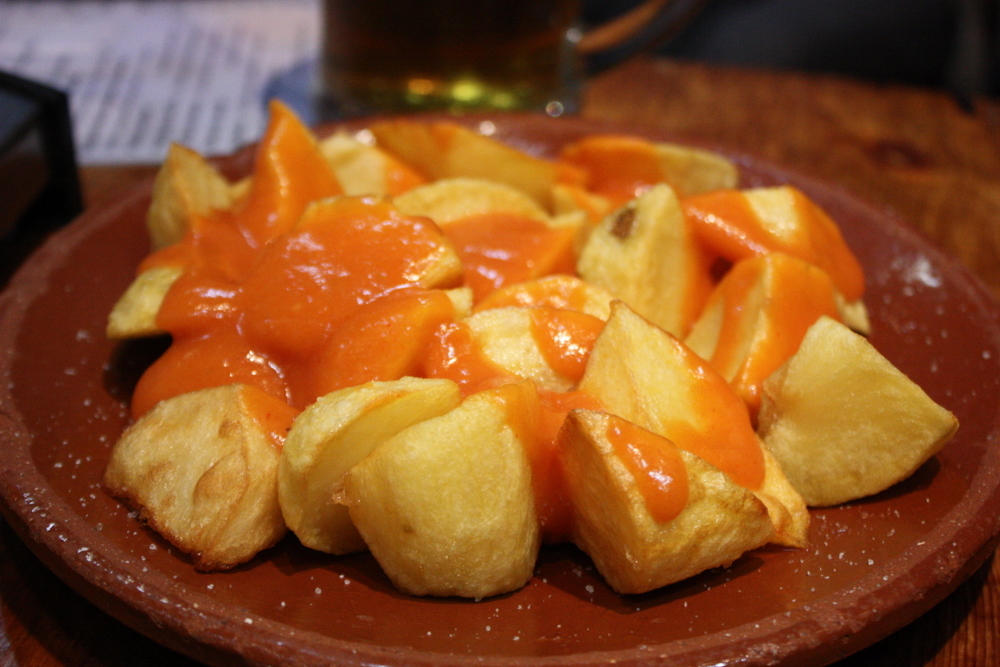
On almost every Spanish tapas menu, Patatas Alioli sits directly next to Patatas Bravas and almost always loses the popularity contest — no bright sauce, no chilli, nothing that photographs as dramatically. But it has kept its place on menus for exactly as long, because a good version delivers something bravas can't: a clean, assertive garlic hit against genuinely crisp potato, with nothing else competing for attention.
It's often the tapa people are surprised to find themselves ordering twice.
"All i oli" — Catalan/Valencian for "garlic and oil," the sauce's original two ingredients.
Western Mediterranean — close cousins exist in southern France and Italy.
Crisp roasted potato and an alioli assertive enough to actually taste of garlic.
Tapas Madriz brings authentic Spanish flavours to Melbourne — cooked live in front of your guests.
Get the Recipe Get a Free QuoteTapas Madriz Assistant
Online — ask me anything